6 Best Podia Alternatives for Selling Digital Products
Comparing the best Podia alternatives. Find affordable, modern platforms to sell digital downloads, courses, and memberships without heavy fees.

6 Best Podia Alternatives for Selling Digital Products
Podia is an all-in-one platform that combines digital downloads, online courses, webinars, and basic email marketing.
However, Podia's free tier imposes a 10% transaction fee, and upgrading to avoid platform fees costs $39 to $89+ every month. For creators whose main priority is selling digital files, templates, guides, and ebooks, paying for a bulky suite of unused course players and community boards often adds unnecessary cost and complexity.
If you are looking for lower fees, a simpler setup, and high-converting storefront themes, here are the 6 best Podia alternatives.
1. Djaty
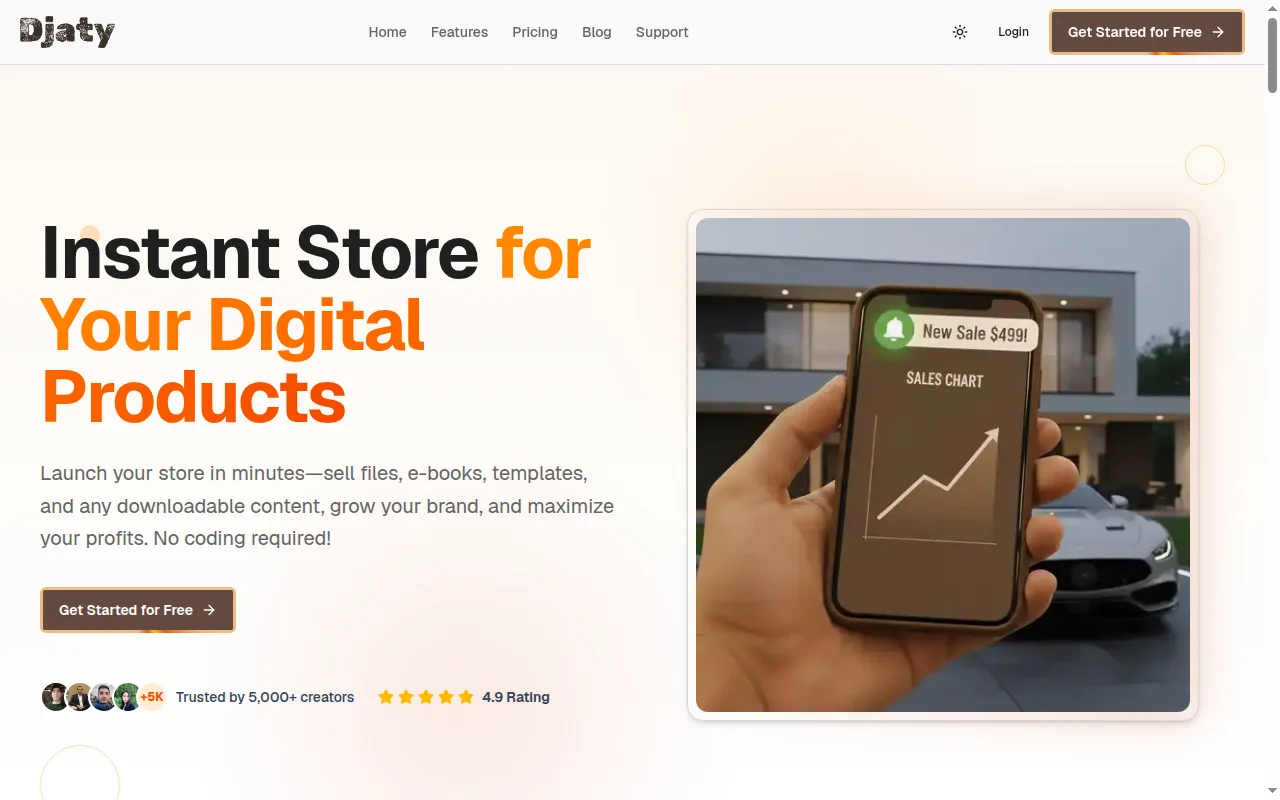
Djaty is the creator's core command center for digital product commerce—engineered specifically to give digital sellers maximum profit margins and a frictionless customer experience.
Main Utility & Highlights
Unlike complex platforms that try to bundle forums, email marketing, and websites into an overloaded interface, Djaty focuses on delivering an intuitive, high-performing digital storefront.
Key benefits of Djaty include:
- Simplicity & Ease of Use: Launch your digital storefront in minutes with zero coding or technical setup. The dashboard is clean, fast, and organized so you can add products, set prices, and start selling immediately.
- High-Converting, Optimized Themes: Djaty comes with professionally designed storefront themes optimized specifically for digital products. Every theme is built for speed, clean presentation, and seamless checkout on mobile and desktop devices.
- The Personal Buyer Library: Instead of standard file download links sent by email that can easily be lost or expire, every buyer receives access to a dedicated personal digital library dashboard. Creators can update products at any time (releasing revised e-book editions, updated templates, or new bonus materials), and buyers can log in anytime to access the updated version and see new instructions.
Fee Structure & Pricing
Djaty is built to protect your revenue margins:
- Free Plan ($0/month): Start selling immediately with transaction fees from 5% down to 0% with Elite.
- No Heavy Overhead: Pay only when you make sales, without being locked into expensive monthly software bills.
Pros:
- Low 0% to 5% transaction fees with a $0/mo free plan
- High-converting, mobile-optimized storefront themes
- Dedicated buyer library for automatic file updates and new instructions
- Fast, simple setup with zero technical barrier
- 100% ownership of your customer list and data
Cons:
- Tailored for digital products and resources rather than multi-tier community chat boards
2. Teachable

Teachable is an online platform for hosting structured online courses and coaching programs.
Main Utility & Highlights
If you need an educational platform featuring video lessons with graded quizzes, completion certificates, student compliance tracking, and multiple instructors, Teachable provides dedicated course delivery tools.
Fee Structure & Pricing
- Free Plan: $0/mo + $1 and 10% transaction fee.
- Basic Plan: $39/mo (billed annually) + 5% transaction fee.
- Pro Plan: $119/mo (billed annually) with 0% transaction fees.
Pros:
- Structured course player with quizzes and certificates
- Native student compliance and progress monitoring
- Built-in affiliate marketing system
Cons:
- High transaction fees on Free and Basic tiers
- 0% transaction fees require the $119/mo Pro plan
3. Thinkific
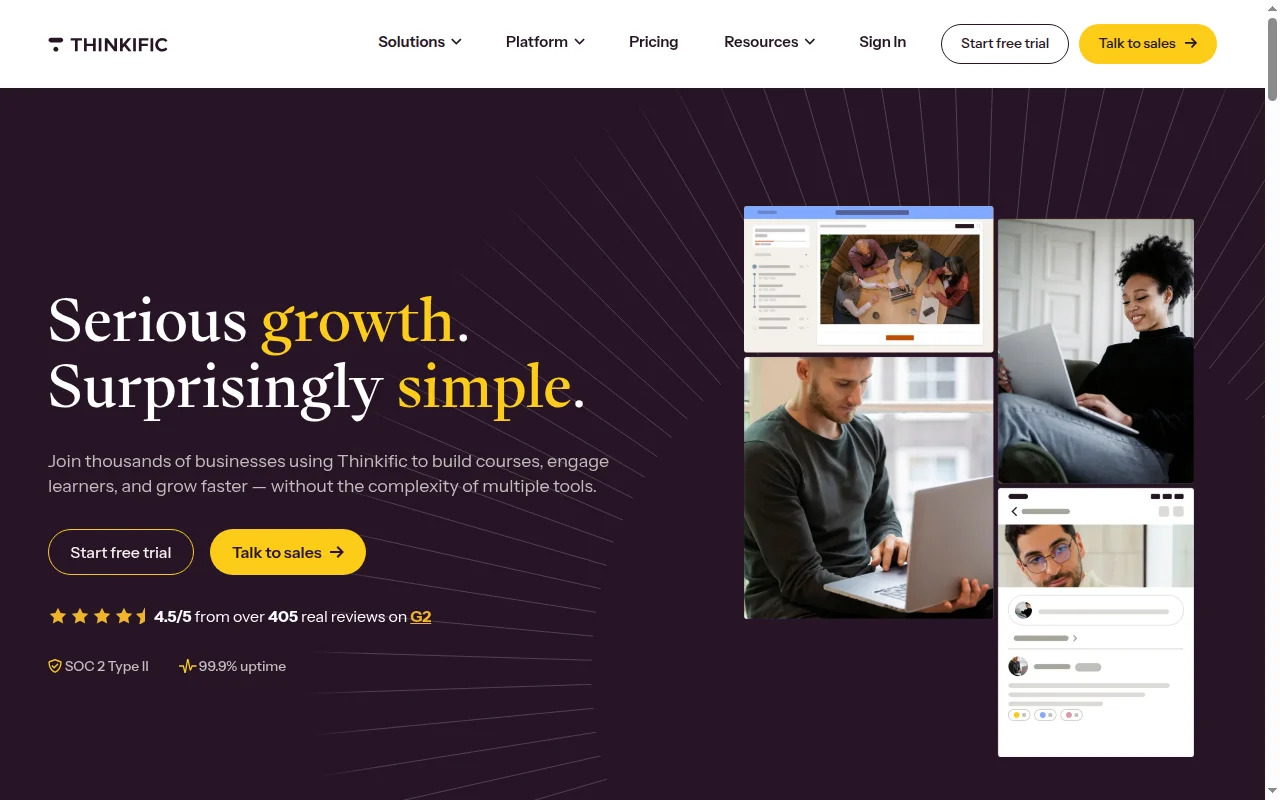
Thinkific is an online course platform focused on delivering structured student learning experiences.
Main Utility & Highlights
Thinkific emphasizes student engagement and curriculum control. It offers multi-lesson modules, drip content scheduling, assignments, and drag-and-drop course website design tools without transaction fees on paid plans.
Fee Structure & Pricing
- Free Plan: $0/mo for 1 course with limited students.
- Basic Plan: $36/mo (billed annually).
- Start Plan: $74/mo (billed annually).
- 0% transaction fees on all paid plans.
Pros:
- No transaction fees on paid plans
- Course features including assignments, surveys, and certificates
- Reliable video streaming infrastructure
Cons:
- Steeper setup curve than simple digital storefronts
- Digital download sales are secondary to course curriculum creation
4. Payhip
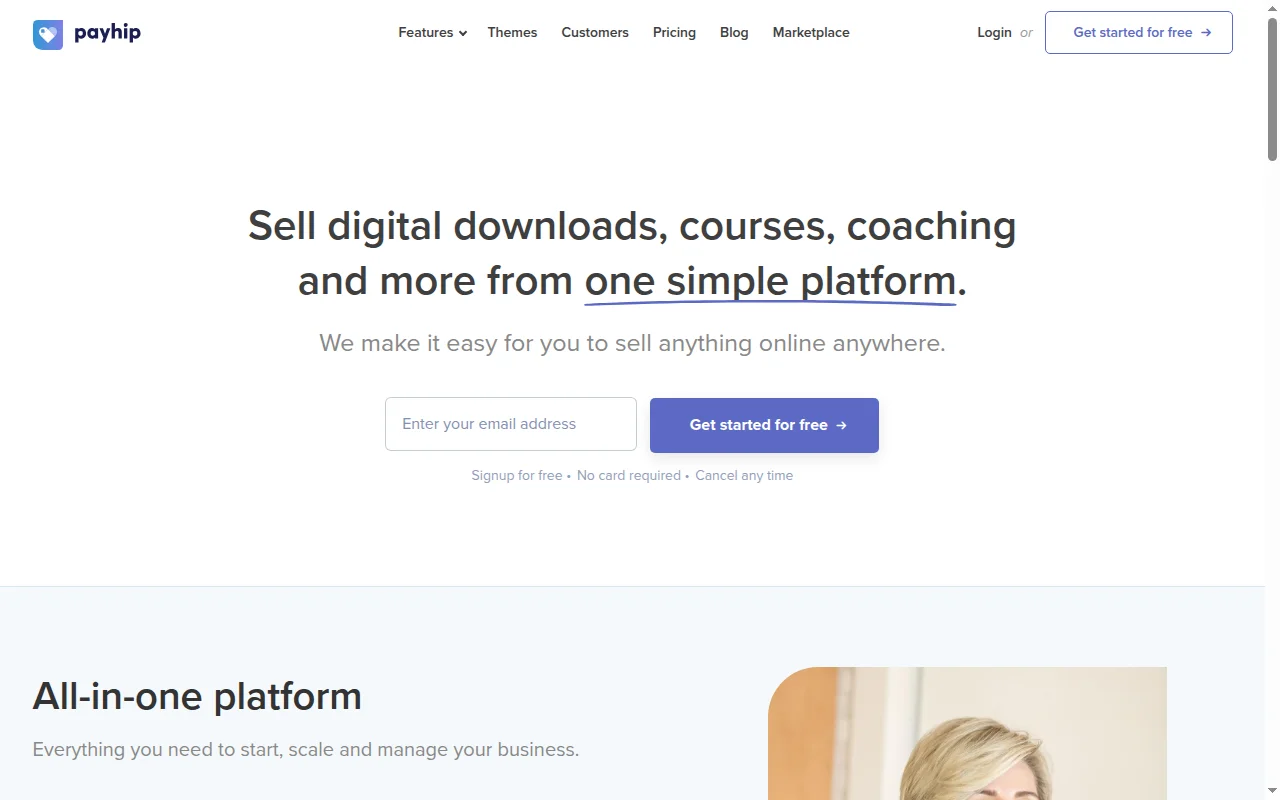
Payhip is an e-commerce platform that allows creators to sell digital downloads, simple courses, and memberships.
Main Utility & Highlights
Payhip is an affordable alternative to Podia for creators who want basic course and download functionality. It includes embeddable checkout widgets for existing websites and built-in international VAT handling.
Fee Structure & Pricing
- Free Plan: $0/mo + 5% transaction fee (plus payment processing).
- Plus Plan: $29/mo + 2% transaction fee.
- Pro Plan: $99/mo + 0% transaction fee.
Pros:
- Lower transaction fee (5%) on the free plan compared to Podia's (10%)
- Embeddable onto existing blogs and websites
- Automatic EU and UK VAT calculation
Cons:
- Basic storefront design and styling options
- Does not offer a comprehensive customer library dashboard for file revisions
5. Gumroad
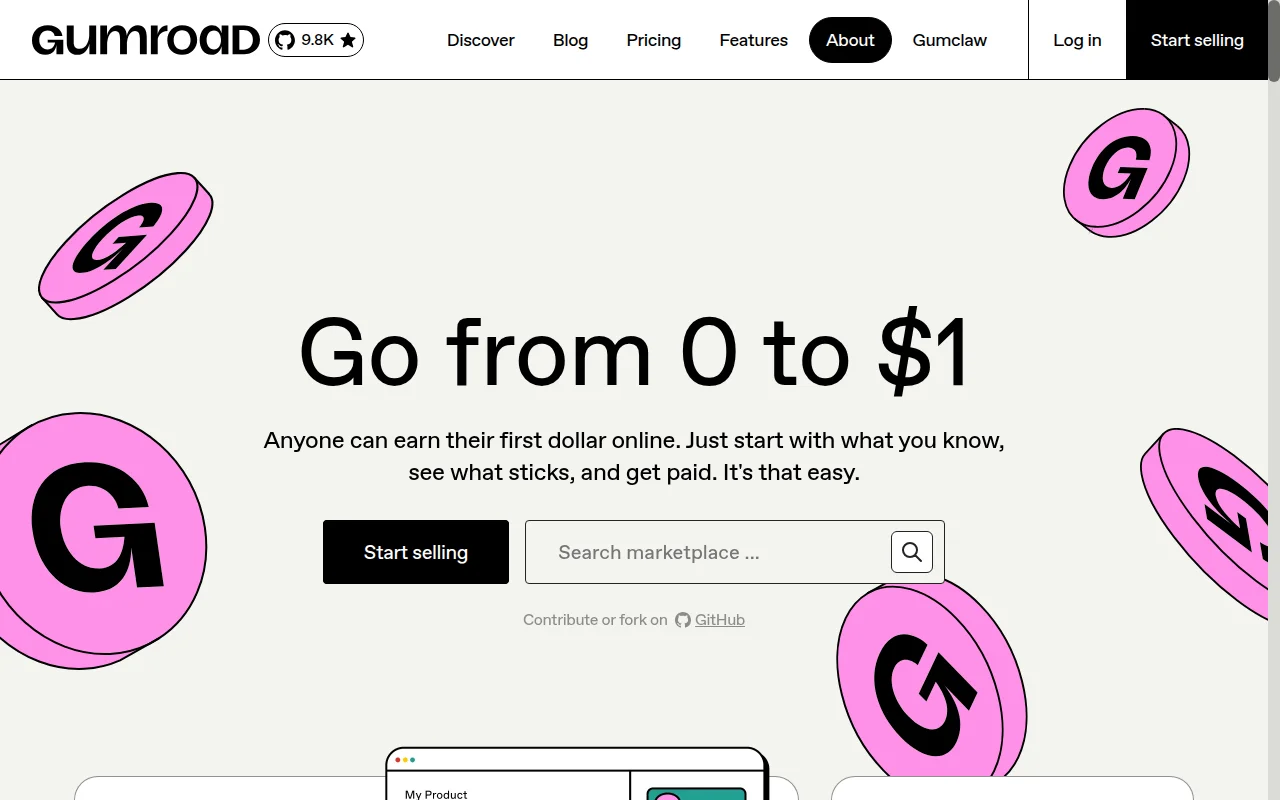
Gumroad is a pay-as-you-go checkout platform for creators selling digital files, software, and memberships.
Main Utility & Highlights
For creators who want to sell digital items without paying Podia’s monthly subscription fee, Gumroad allows you to publish individual product checkout links and share them directly with your audience.
Fee Structure & Pricing
- No Monthly Fee: $0/month.
- Transaction Fees: Gumroad charges a flat 10% + $0.50 per sale on direct link purchases. However, if a customer discovers and buys your product through the Gumroad Discover marketplace, the transaction fee increases to 30%.
Pros:
- No monthly recurring fee to keep an account active
- Recognizable checkout interface
- Supports digital files, license keys, and simple subscriptions
Cons:
- Fees range from 10% + $0.50 up to 30% on marketplace purchases
- Limited storefront customizability
6. Kajabi
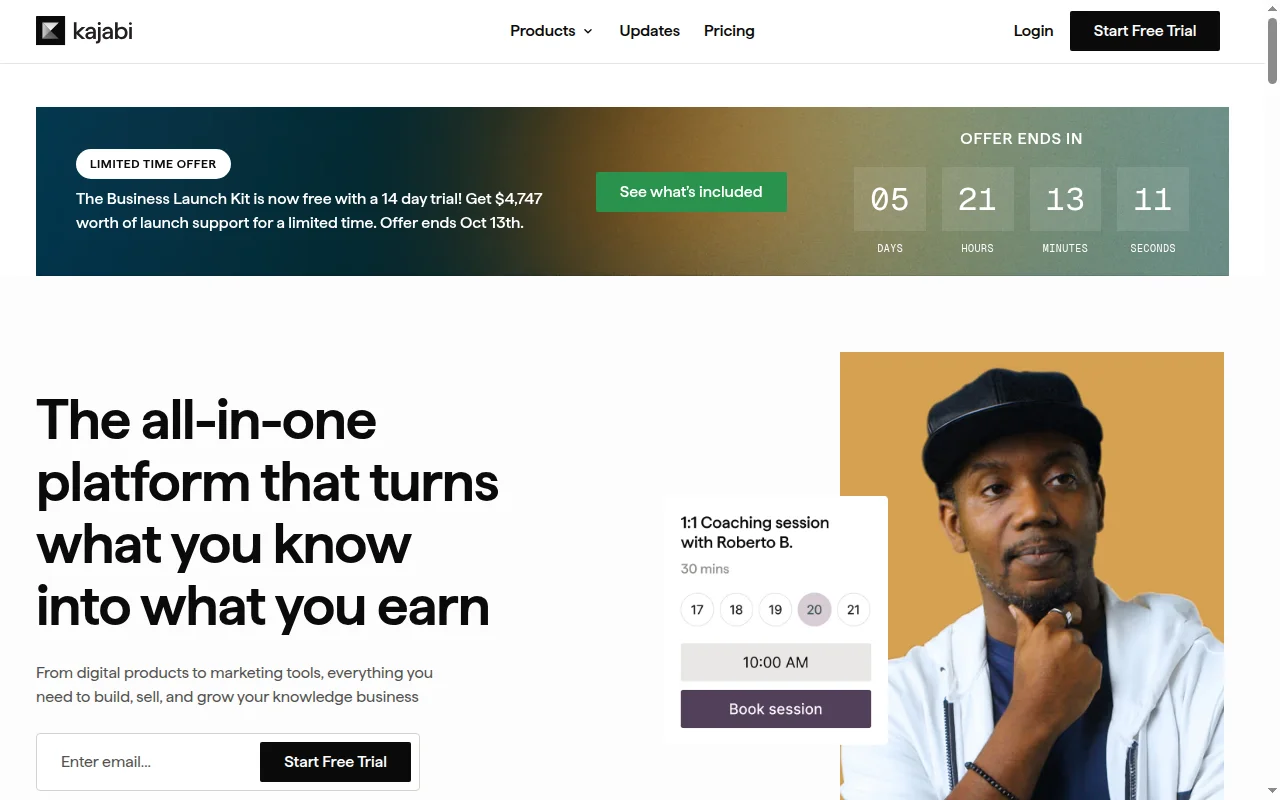
Kajabi is an all-in-one platform for courses, podcasts, coaching, and marketing automation.
Main Utility & Highlights
Kajabi is built for knowledge businesses that require end-to-end sales pipelines, marketing automation, email funnels, and integrated podcasts alongside their course catalog.
Fee Structure & Pricing
- Kickstarter Plan: $69/mo (billed annually) for 1 product.
- Basic Plan: $149/mo (billed annually) for up to 3 products.
- Growth Plan: $199/mo (billed annually) for up to 15 products.
- 0% platform transaction fees on all plans.
Pros:
- Integrated marketing funnels and automation
- Mobile app access for course students
- 0% transaction fees
Cons:
- High monthly subscription cost ($149/mo minimum on standard plans)
- Substantial feature complexity for sellers primarily offering digital downloads
Summary: Which Podia Alternative Should You Choose?
- Pick Djaty if you sell digital downloads, templates, e-books, or guides and want high-converting optimized themes, 0% to 5% fees starting at $0/mo, and a dedicated buyer library where customers access updated versions and new instructions.
- Pick Teachable if you are building an online academy with student quizzes, assignments, and certificates.
- Pick Thinkific if you want structured curriculum tools and student progress tracking without transaction fees on paid plans.
- Pick Payhip if you want a budget-friendly way to embed simple checkouts on an existing website.
- Pick Kajabi if you require complex automated sales funnels and marketing pipelines.
Looking for a simple platform with high-converting themes and lower fees? Start selling on Djaty for free today.