Best Platforms to Sell an Ebook in 2026
Compare the best platforms to sell ebooks online. Discover how to maximize your earnings with low fees and user-friendly features.

Best Platforms to Sell an Ebook in 2026
Writing an ebook is a major accomplishment, but it's only half the battle. To turn your words into a successful stream of income, you need to choose the right platform to sell it. The platform you select affects everything from how much money you keep from each sale to the experience your readers have when purchasing and downloading your ebook.
In this guide, we'll break down the best platforms to sell an ebook in 2026, comparing their features, ease of use, and fee structures so you can maximize your revenue.
1. Amazon KDP (Kindle Direct Publishing)
Amazon KDP is a large platform in the digital book world, giving you direct access to millions of readers shopping in the Kindle Store.
Features & Ease of Use
KDP allows you to publish your book to Kindle devices and apps worldwide. You get access to Amazon's large built-in audience, search engine, and promotional programs like Kindle Unlimited (KDP Select). However, the platform's layout is somewhat dated, the formatting requirements can be rigid, and you do not get access to your customers' email addresses, making it difficult to build a direct relationship with your audience.
Fee Structure
Amazon's pricing models are highly restrictive and come with steep fees:
- 65% Transaction Fee: Applied if your ebook is priced below $2.99 or above $9.99 (no delivery fees are deducted at this tier).
- 30% Transaction Fee: Available only for ebooks priced between $2.99 and $9.99. Under this tier, you must also pay delivery fees based on the ebook's converted file size (typically $0.15 per megabyte in the US), which can eat into your margins.
Pros:
- Big global marketplace size and built-in organic traffic
- Easy integration with Kindle devices
- Opportunities for promotion via Kindle Unlimited
Cons:
- Extremely high fees/revenue cuts (up to 65%)
- Strict pricing guidelines and minimums
- Amazon owns all customer relationships (no email list access)
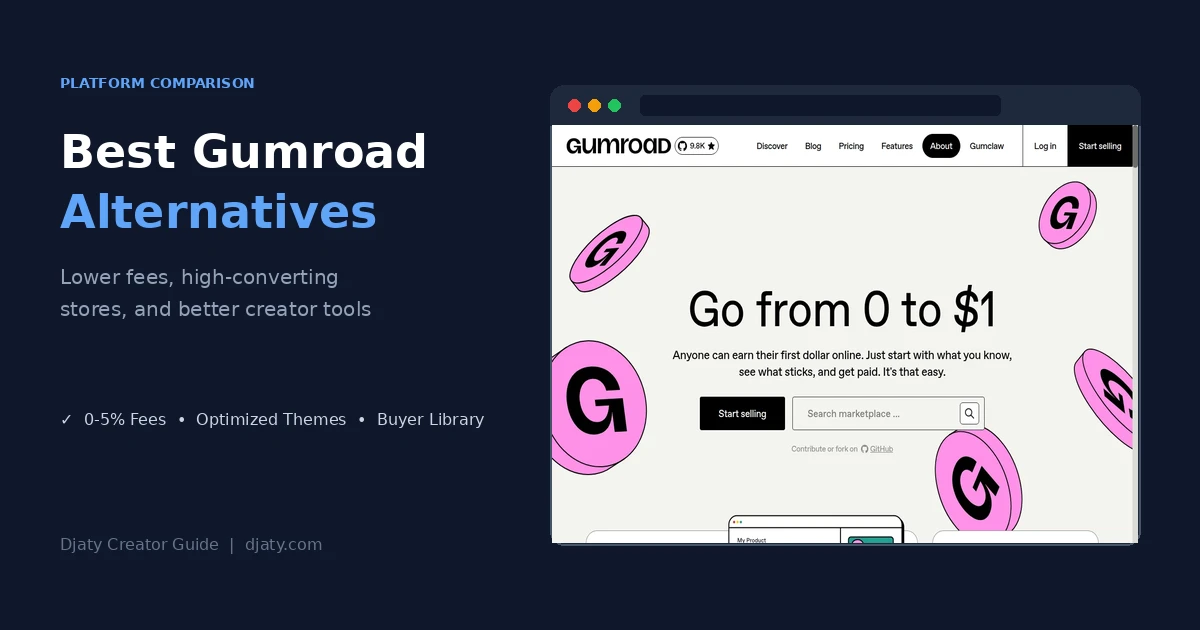
2. Gumroad
Gumroad is a popular host for independent digital downloads, offering creators a quick way to host and sell their ebooks without setting up a full store.
Features & Ease of Use
Gumroad is highly intuitive. You can set up a product page quickly, customize the checkout redirect, and utilize basic email marketing features built directly into the platform.
Fee Structure
Gumroad charges a flat 10% + $0.50 transaction fee plus payment processing fees for direct access sales (where customers buy directly using your links). However, if a sale is generated through the Gumroad Discover marketplace, they charge a flat 30% fee (which includes the payment processing fee).
Pros:
- No monthly subscription fee
- Built-in affiliate marketing tool
- Simple, recognizable checkout for customers
Cons:
- Very high transaction fees (10% + $0.50 direct, 30% marketplace) which eat into margins
- Minimal design customization options
- Restricted access to advanced customer analytics
3. Djaty
Djaty is the premier choice for creators who want a simple, direct-to-consumer store with the lowest possible fees. It is built specifically to make digital selling as profitable and frictionless as possible.
Features & Ease of Use
Djaty is incredibly easy to use. Within minutes, you can create a beautiful, responsive storefront, upload your ebook (PDF, EPUB, or MOBI), and start accepting payments. It integrates seamlessly with payment processors and offers instant delivery to your buyers, protecting your files while ensuring a smooth download process. Unlike marketplaces, Djaty gives you full ownership of your customer list and data.
Fee Structure
The standout feature of Djaty is its creator-first pricing. Djaty offers flexible plans starting at $0/mo with transaction fees from 5% down to 0% with Elite.
Compared to platforms like Amazon KDP and Gumroad that take large chunks of your hard-earned sales, Djaty keeps fees to an absolute minimum so you can keep the rest of your hard-earned money and reinvest it in your business.
Pros:
- Ultra-low transaction fees (0% to 5% with free plan option)
- Super fast and easy store setup
- Clean, modern, responsive checkout design
- Immediate digital file delivery and email receipts
- Complete ownership of customer data and email list
Cons:
- Fewer built-in marketplace discovery features (best suited for creators who have or are building their own audience)
Which Platform is Right for You?
Choosing the right ebook platform depends on your marketing strategy and how much margin you want to retain:
- If you want the absolute best margins (keeping 98% of your money), a modern user experience, and full ownership of your customer list, Djaty is the clear winner.
- If you have no existing audience and need Amazon's search engine and large marketplace to find readers for you despite paying up to a 65% fee, Amazon KDP is the standard choice.
- If you want a quick option for digital downloads without a monthly subscription, but don't mind paying high transaction fees (10% + $0.50 direct or 30% marketplace) plus payment processing fees, go with Gumroad.
Ready to start selling your ebook? Create your store on Djaty today and keep more of what you earn!